

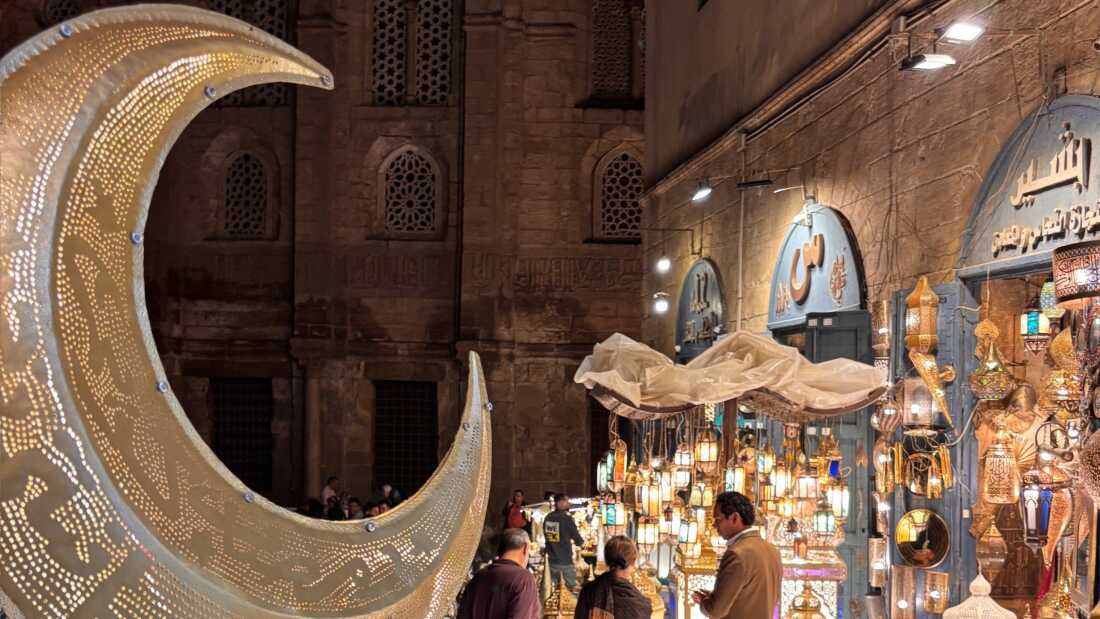

During Ramadan 2026 (February 18 to March 19), Cairo transforms into a city that barely sleeps. From lantern-lit bazaars and cannon-fired sunsets to midnight street feasts beneath the minarets of Islamic Cairo, here are five experiences every visitor, expat, and digital nomad should put on the calendar right now. 5 Things Not to Miss in Egypt During Ramadan 2026:
Quick Facts
- Ramadan 2026 dates: Evening of Feb 18 to approx. Mar 19 (subject to moon sighting)
- Iftar time (sunset): Roughly 5:50 PM (early March) to 6:05 PM (mid-March)
- Best sightseeing window: 9:00 AM to 2:00 PM, when streets are nearly empty
- Rush hour to avoid: 3:30 PM to 5:30 PM (everyone racing home for Iftar)
- City comes alive: 7:00 PM to 4:00 AM
- Currency: 1 USD ≈ 50 EGP (Feb 2026)
1. Dine Under the Pyramids and Inside the Grand Egyptian Museum
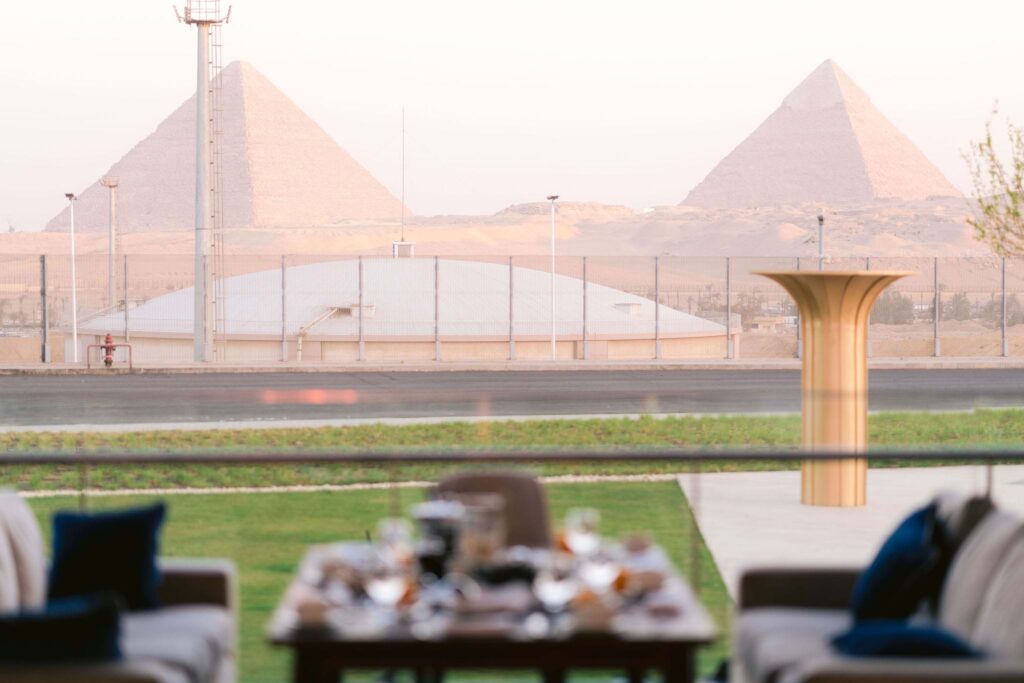
Nothing in the world compares to breaking bread while the Giza Pyramids glow amber against a darkening sky. During Ramadan, several premium tents pop up within sight of the Sphinx, and in 2026, the options have never been better.
Sawa at Panorama 2 sits right at the Pyramids plateau. The food is lavish buffet-style Egyptian and Levantine, the live music is loud enough to feel festive but not enough to drown your conversation, and the view is, well, 4,500 years of human ambition lit up in front of your table.
If you prefer something more refined, Al Mashrafya at the Grand Egyptian Museum (GEM) blends Pharaonic grandeur with Ramadan spirit. Picture traditional Egyptian music echoing through halls that house Tutankhamun’s treasures. It is genuinely unlike any dining experience on the planet.
While the Giza Plateau is an essential start to any Cairo Trip, you can find our full ranking of the city’s top experiences, from the Grand Egyptian Museum to secret Nile spots, in our comprehensive guide to the best things to do in Cairo in 2026.
Local’s Pro-Tip:
Book any Pyramids or GEM tent at least a week in advance, especially for Thursday and Friday nights. Arrive 30 minutes before Iftar. The silence that falls over the entire plateau at the moment of the Adhan (call to prayer) is hauntingly beautiful and worth every minute of the wait.
2. Lose Yourself in Khan El-Khalili After Dark
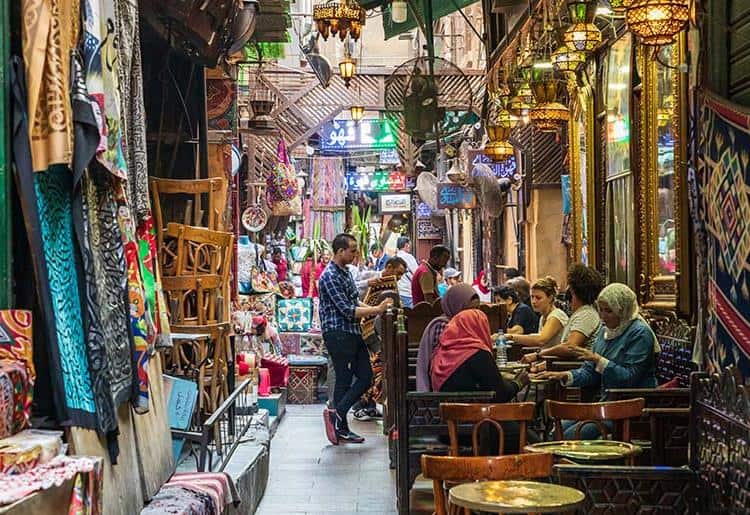
If you have visited Khan El-Khalili during the day in any other month, forget everything you think you know. Ramadan transforms Cairo’s 600-year-old bazaar into a sensory overload that starts around 8:00 PM and does not quit until well past midnight.
The narrow alleys between Al-Muizz Li-Din Allah Street and Al-Azhar Street fill with the warm glow of handmade fanous lanterns (ranging from tiny 50 EGP souvenirs to elaborate floor-standing pieces for 2,000 EGP+). Vendors call out prices, copper workers hammer trays, and the thick scent of oud incense mixes with freshly brewed sahlab from corner stalls.
Start at the Al-Muizz Street entrance near Bab El-Futuh and walk south. Stop at El Fishawy Cafe, which has served mint tea and shisha since 1773, and still does not take reservations. You sit when a chair opens. Around you, families and tourists pack the alley tables, sipping Karkade (Hibiscus Tea) and Qamar Al-Din (Apricot Juice) while kids run between the lantern stalls.
Duck into the side alleys for the real treasures: hand-stitched leather bags, brass Ramadan cannons, mother-of-pearl inlaid boxes, and spice blends you will not find in any supermarket.
Local’s Pro-Tip:
Go on a weeknight (Sunday through Wednesday) to avoid the weekend crush. Wear comfortable shoes because the stone streets are uneven. And do not buy the first lantern you see. The deeper into the souk you walk, the better the prices get.
3. Witness the Ramadan Cannon at the Citadel
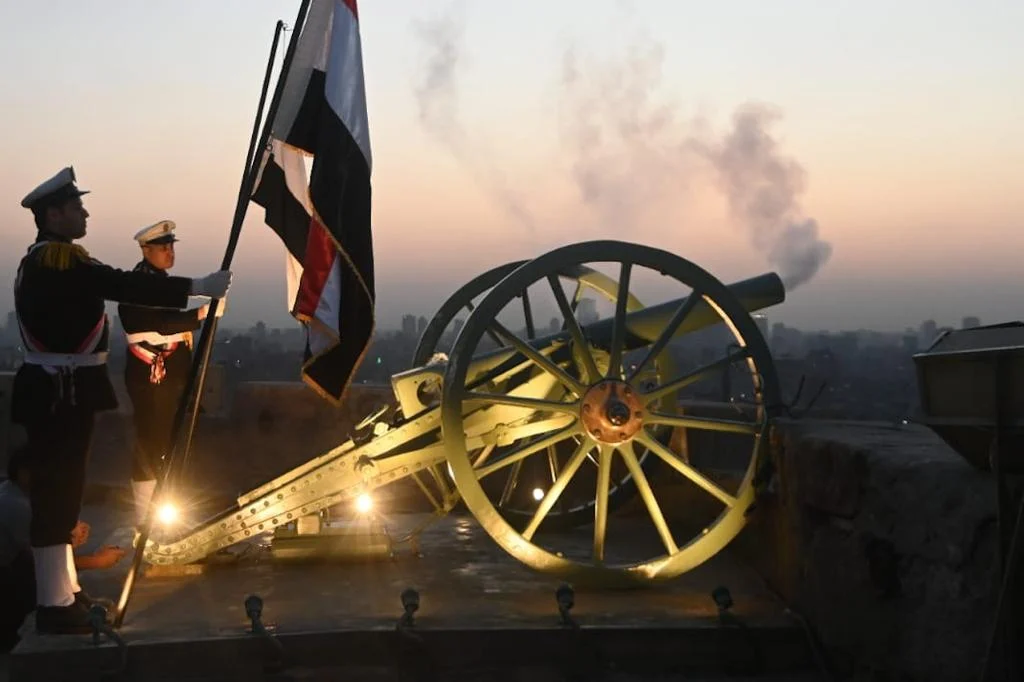
Every evening at sunset during Ramadan, a cannon fires from the Saladin Citadel, signaling the exact moment of Iftar across Cairo. The tradition, called Midfa Al-Iftar, dates back to the era of Khedive Muhammad Ali in the 19th century. It fell silent for nearly 30 years but was revived in 2021, and in 2026, it remains one of the most thrilling (and free) spectacles in the city.
Here is what happens: the city goes quiet around 5:30 PM. Traffic thins. Shops pull down their shutters halfway. Street food vendors set out plates of dates and cups of water on folding tables for anyone passing by. Then, the boom. One deep, resonant shot echoes across the hills of Mokattam and through the minarets of Islamic Cairo. Within seconds, the city exhales. Lights flicker on. Spoons hit soup bowls. Cairo begins eating.
Position yourself on Al-Muizz Street or any rooftop cafe in the Darb Al-Ahmar neighborhood for a panoramic view of the City at the moment of the blast.
Local’s Pro-Tip:
Even if you can’t make it to the Citadel, you won’t miss the moment. The firing of the ‘Madfa al-Iftar’ (Ramadan Cannon) is a sacred Egyptian tradition that echoes far beyond the castle walls; the legendary blast is broadcast live across every TV channel and radio station in the country, signaling the exact second for millions of Egyptians to break their fast in harmony. Pair this nationwide ‘boom’ with a street Iftar (see #4 below) for the ultimate sensory experience of a Cairo Ramadan.
4. Eat at a Maa’idat Al-Rahman (Free Street Iftar Table)
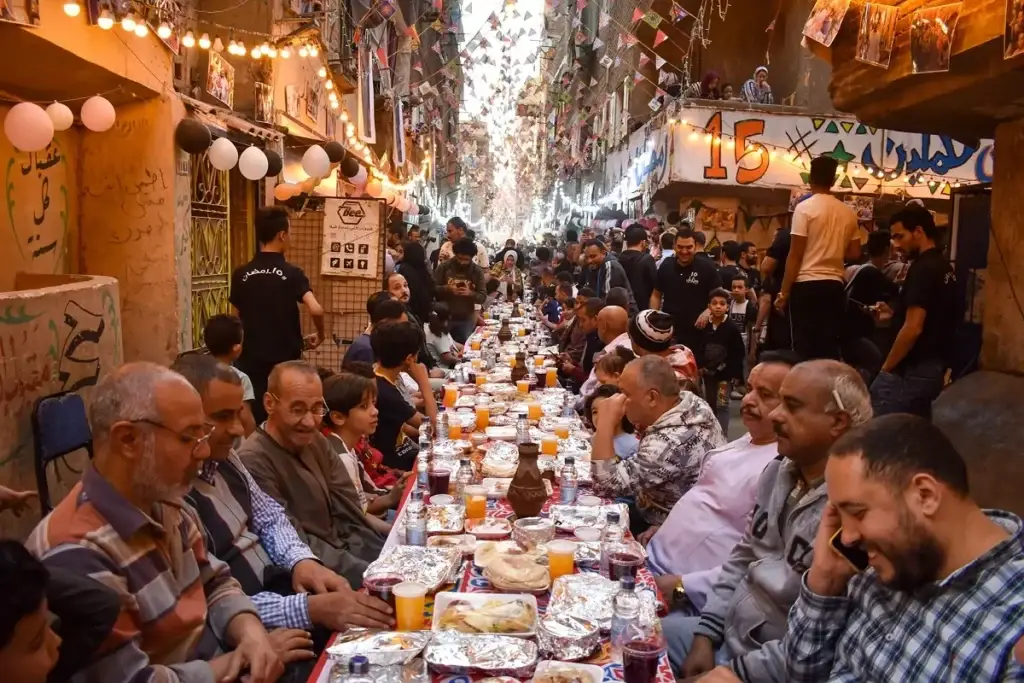
This is the experience that makes Ramadan in Cairo unlike Ramadan anywhere else on Earth. Maa’idat Al-Rahman (Tables of the Merciful) are free communal Iftar meals set up on sidewalks, mosque courtyards, and residential streets by families, businesses, and charitable organizations. No questions asked, no ID checked, no payment expected. You sit, you eat, you are welcome.
The tables start appearing around 4:30 PM. Volunteers lay out plastic sheets, arrange plates of rice, roasted chicken or meat, salad, bread, dates, and jugs of juice. By 5:30 PM, rows of strangers sit shoulder to shoulder, waiting for the Adhan. After the cannon fires, everyone eats together.
The largest tables seat hundreds. Look for them along Ramses Street near downtown, in Sayeda Zeinab around the mosque, and throughout Darb Al-Ahmar and Gamaliya in Islamic Cairo. Smaller neighborhood tables pop up on nearly every residential block in Cairo.
Local’s Pro-Tip:
Bring nothing. Seriously. Just show up. If you want to contribute, ask the organizers if they need help setting up or clearing plates afterward. That gesture means more than money. And yes, photography is fine, but ask first and keep it respectful.
5. Stay Up for the Mesaharati and Suhoor Culture
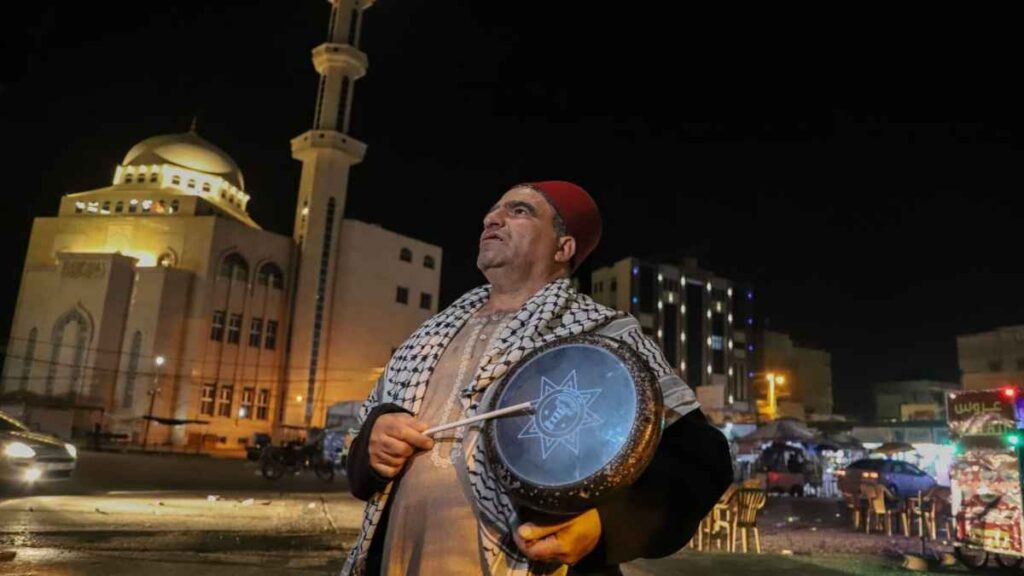
If you think Cairo at 2:00 AM is quiet, you have not been here during Ramadan. The Mesaharati is a drummer who walks through neighborhood streets before dawn, beating a small drum (called a tabla baladi) and chanting names to wake residents for Suhoor, the pre-dawn meal. The tradition is centuries old, and while it has faded in some parts of the Middle East, it is stubbornly, gloriously alive in Cairo’s older neighborhoods.
They typically start their rounds between 2:00 AM and 3:30 AM. The chanting follows a melodic pattern: the drummer calls out “Eshaa ya nayem, wahed el dayem” (“Wake up, sleeper, and praise the Eternal One”), sometimes adding residents’ first names.
Quick Fact
El-Mesaharati is a living piece of Egyptian history; for centuries, these ‘dawn awakeners’ have walked the moonlit streets with their small drums, calling out to neighbors by name to wake them for suhoor before the sun rises.
After you are woken up, you eat. Suhoor in Cairo ranges from home-cooked Ful Medames (stewed fava beans, available at any street cart for 15-30 EGP) to extravagant tent experiences.
A budget-friendly Suhoor move: head to any Ful and Tameya cart in Downtown Cairo after midnight. A plate of ful, fresh baladi bread, pickled vegetables, and a glass of tea at a local ahwa will cost you under 100 EGP and taste better than it has any right to.
Local’s Pro-Tip:
Mesaharaties mostly operate in the older, densely packed neighborhoods. Consider booking one night in a Downtown or Islamic Cairo hotel just for this. Waking up to drumming and chanting in a stone-walled alley at 3:00 AM during Ramadan is something you will remember for the rest of your life.
Why This Matters
Ramadan in Cairo is not a “holiday inconvenience” for tourists to navigate around. It is arguably the single best time to experience the city’s soul. The generosity of free street tables, the communal energy of nighttime bazaars, the ancient cannon blast rippling through minarets, the hypnotic drumming at 3:00 AM: these are not disruptions. They are the point. Egypt welcomes over 18 million tourists annually, and the ones who visit during Ramadan overwhelmingly describe it as the most memorable trip of their lives.
While these essential experiences are a must for any visitor, you can discover even more of the city’s hidden soul in our complete guide to Ramadan in Cairo 2026, where we dive deep into local suhoor secrets and the best neighborhood traditions.
FAQs
Is it safe to visit Cairo during Ramadan 2026?
Yes. Ramadan is a peaceful, family-oriented month. Tourist areas remain open and well-patrolled. The streets are calmer during the day and lively (but friendly) at night.
Are the Pyramids and museums open during Ramadan?
Yes. The Pyramids of Giza open from approximately 7:00 AM to 4:30 PM, and the Grand Egyptian Museum from 8:30 AM to 4:00 PM. Expect closings about one hour earlier than usual. For updated hours, check egymonuments.gov.eg.
Do I need to fast as a non-Muslim tourist?
No. You are welcome to eat and drink during the day. Restaurants in tourist areas, hotels, and neighborhoods like Zamalek, Maadi, and Giza remain open and serve food throughout daylight hours.
What should I wear during Ramadan in Cairo?
Cover your shoulders and knees when visiting mosques or religious areas. Light layers work well since temperatures range from 15 to 25°C in February and March. Ladies might enjoy buying a colorful Ramadan kaftan or abaya in Khan El-Khalili to wear in the evenings.
How much should I budget per day?
Budget travelers can manage on $30-50/day (1,500-2,500 EGP) covering street food, public transport, and basic accommodation. Mid-range travelers spend $80-150/day. A premium Ramadan tent Iftar alone can run 1,300-3,900 EGP per person.
When is Eid Al-Fitr 2026?
Eid Al-Fitr is expected around March 19-21, 2026. The city erupts in celebration: new clothes, family gatherings, sweets everywhere, and parks packed with picnickers. It is a wonderful (and hectic) time to be in Cairo.
Planning your first Ramadan in Cairo? Subscribe to the 2026 Cairo Self-Guide Newsletter for weekly insider tips, updated schedules, and exclusive local recommendations delivered straight to your inbox.
Subscribe to the Free Newsletter →