


Egypt did not simply adopt Ramadan. Egypt designed it. The lantern swinging from a child’s hand in Riyadh, the cannon fired at sunset in Dubai, the mesaharati drumming through the streets of Amman, the konafa cooling on a counter in Beirut: every one of these traditions was born on the banks of the Nile, incubated in the alleys of Fatimid Cairo, and exported to the Arab world through centuries of cultural gravity and, later, through the irresistible pull of Egyptian radio, cinema, and television.
Quick Facts
Fatimid Dynasty in Egypt: 969 to 1171 CE.
First recorded Fanous (lantern) use: 969 CE, on the arrival of Caliph Al-Mu’izz li-Din Allah in Cairo.
First Mesaharati in Egypt: Approximately 852 to 853 CE (238 AH), during the Abbasid governorship.
Ramadan Cannon origin: Mamluk Cairo, reign of Sultan Khosh Qadam (c. 1465 CE / 859 AH).
Maa’idat Al-Rahman (free public banquets) origin: Ahmad ibn Tulun, 9th century.
Kahk cookies: Traced to Pharaonic temple offerings, approximately 3,500 years ago1
The Genesis of the “Ramadan Vibe”: Why Egypt, Specifically?
Fasting during Ramadan is one of the five pillars of Islam, practiced by roughly two billion Muslims worldwide. But fasting is discipline. The atmosphere around the fast, the decorations, the sounds, the foods, the nightly rituals, that is culture. And that culture is overwhelmingly Egyptian.
Let’s uncover together the story of how Egyptian Ramadan traditions shaped the Middle Eastern vibe:
The reason is geography and timing. Cairo has been the largest city in the Arab and Islamic world for most of the last thousand years. When the Fatimid dynasty established it as their capital in 969 CE, they inherited a population already steeped in thousands of years of festival traditions stretching back to Pharaonic harvest celebrations and Coptic feasts. The Fatimids, who were deeply invested in public spectacle as a tool of political legitimacy, layered Islamic observance onto this existing festive DNA. The result was something new: Ramadan not merely as a spiritual obligation but as a month-long, city-wide celebration with its own visual language, soundtrack, and menu.
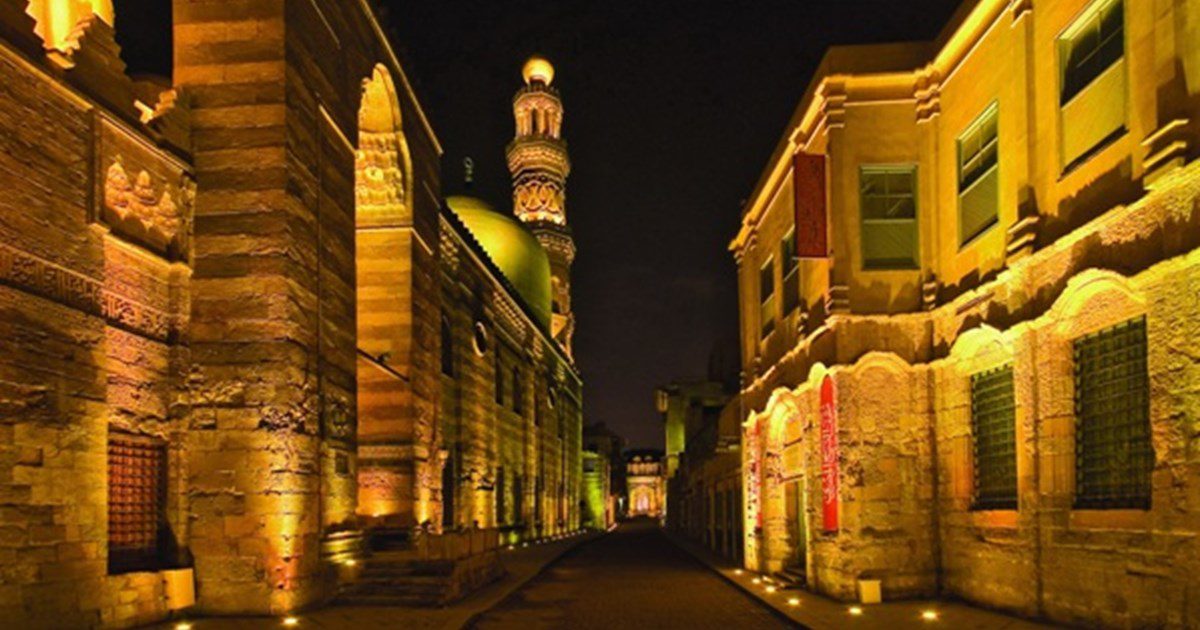
The historian Taqi al-Din al-Maqrizi (1364 to 1442), in his encyclopedic masterwork Al-Mawa’iz wa al-I’tibar bi Dhikr al-Khitat wa al-Athar (commonly known as Al-Khitat), documented in extraordinary detail how the Fatimid court transformed Ramadan into a state-sponsored festival. Mosques were lavishly illuminated. Markets extended their hours deep into the night. The Fatimid palace distributed food and sweets to the public. Processions wound through the streets. Cairo during Ramadan, as al-Maqrizi describes it, was a city that glowed.
Centuries later, when Egyptian radio launched in the 1930s and Egyptian cinema and television became the dominant cultural force across the Arabic-speaking world by the 1950s and 1960s, these Cairene Ramadan traditions were beamed into living rooms from Casablanca to Baghdad. The Ramadan TV drama, the fawanees (lanterns) advertisements, the nostalgic songs, the celebrity Iftar specials: Egypt did not just celebrate Ramadan. Egypt taught the Arab world how to feel about it.
Local’s Pro-Tip: If you want to understand the Fatimid roots firsthand, walk Al-Muizz li-Din Allah Street in Islamic Cairo during Ramadan 2026. The street is named after the very caliph whose arrival sparked the lantern tradition. In the evening, the medieval mosques and gates along this kilometer-long corridor are illuminated exactly as al-Maqrizi might have described them a thousand years ago, except now with LED.
The Fanous: A Welcoming Torch That Became a Global Symbol
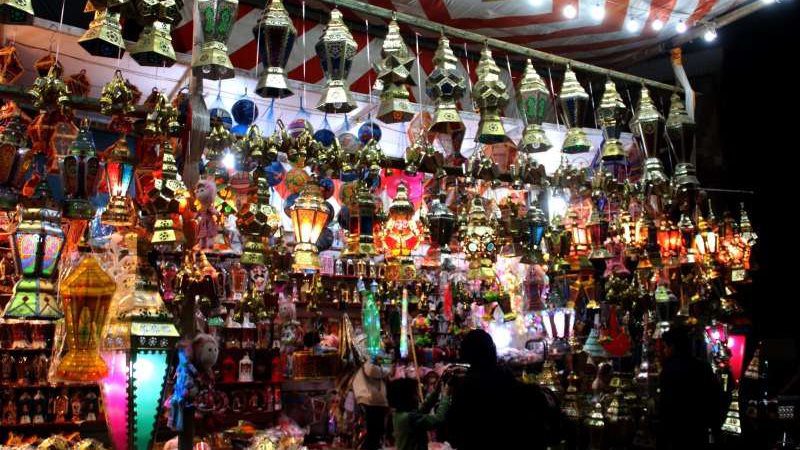
If Ramadan had a logo, it would be the fanous. Today, you can buy Ramadan lanterns in malls from Jeddah to Jakarta. But in 969 CE, the fanous was not a decoration. It was a political tool.
The story, documented across multiple historical sources and now widely accepted by Egyptologists and Islamic historians, centers on the night of the fifth of Ramadan in the year 358 AH (969 CE). The fourth Fatimid Caliph, Al-Mu’izz li-Din Allah, was arriving in Cairo to establish it as his new capital. His viceroy and military commander, Gawhar al-Siqilli, wanted to ensure the Caliph’s caravan would be received with appropriate grandeur. He ordered the citizens of Cairo to line the streets and light the way.
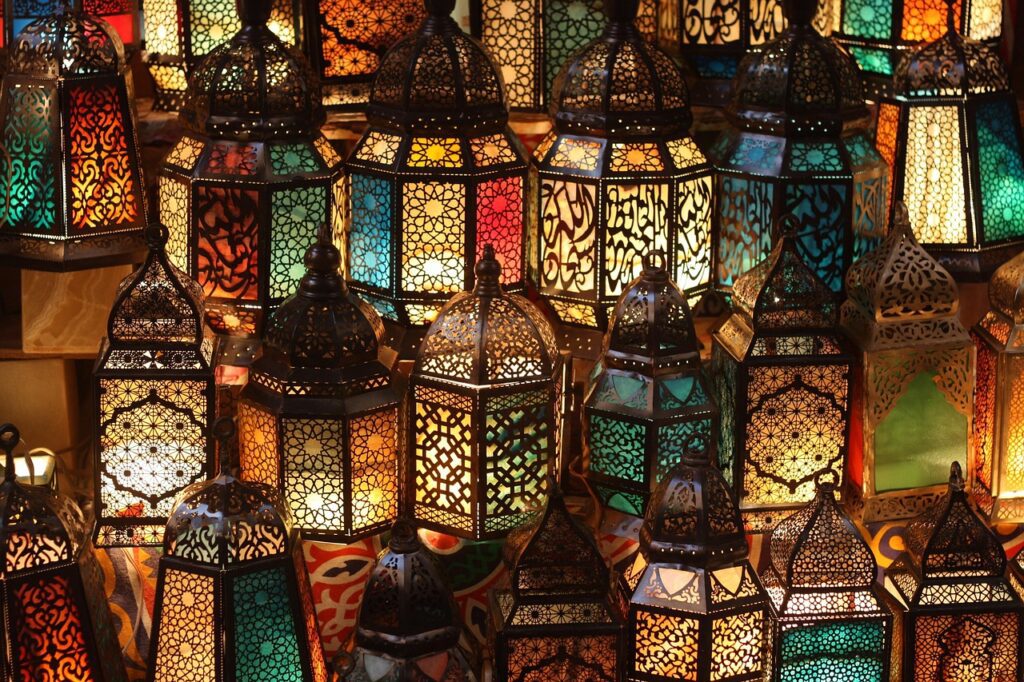
The problem was wind. Open flames would blow out. So local craftsmen devised a solution: they encased candles inside boxes made of wood, tin, or copper, fitted with panels of colored glass to let the light through while shielding the flame. When the Caliph rode through the city that night, he saw a corridor of thousands of these glowing boxes held aloft by his new subjects.
The Caliph was reportedly so impressed that the practice continued. Over the following decades, these improvised lantern-boxes evolved into the decorative fanous. They were used to light the way for worshippers heading to mosques for Taraweeh prayers, to accompany the mesaharati on his pre-dawn rounds, and eventually to simply mark the arrival of the holy month.
The word “fanous” itself is a borrowing from the Greek phanos (meaning lamp), reflecting Egypt’s multilingual heritage and the deep Coptic and Hellenistic layers beneath its Islamic surface.
From Egypt, the fanous traveled. By the Ottoman period, it had spread to the Levant and the Hijaz. By the 20th century, through Egyptian films and commercials, it became the universal visual shorthand for Ramadan across the entire Muslim world. Today, factories in China produce millions of plastic fawanees each year for export to the Middle East. But in the workshops of Al-Muizz Street and the backstreets of Bab al-Khalq in Cairo, artisans still hammer tin and cut colored glass by hand, producing lanterns that echo the ones Gawhar al-Siqilli’s craftsmen first built over a thousand years ago.
The Soundtrack of Ramadan: “Wahawi Ya Wahawi” and the Mesaharati
A Song Older Than Ramadan
Every Egyptian child who has ever swung a fanous through a Ramadan evening has sung the words: “Wahawi ya wahawi, iyyaha.” It is Egypt’s unofficial Ramadan anthem, as inseparable from the month as the crescent moon itself.
What most people do not realize is that this song may be over 3,000 years old.
Linguistic researchers and Egyptologists have traced the phrases “wahawi” and “iyyaha” to ancient Egyptian. “Wah” or “Iah” is believed to refer to the moon in the old Egyptian language (“Iah” was a documented moon deity in the ancient Egyptian pantheon). The chant, in its original form, was a celebration of the appearance of the lunar crescent, a moment of cosmic significance in a civilization that built its entire calendar around the Nile flood and the movement of celestial bodies.
When Islam arrived in Egypt in the 7th century, the chant did not disappear. It simply found a new context. The crescent moon that once signaled the rising of the Nile now signaled the beginning of Ramadan. “Wahawi ya wahawi, iyyaha” became a song of welcome for the holy month, sung by children carrying lanterns through the narrow streets. The melody adapted, the Arabic lyrics grew around the ancient core, but the heartbeat of the song, a celebration of the moon’s return, remained intact across millennia.
The Mesaharati: Egyptian Ramadan Tradition’s 3 AM Wake-Up Call
The mesaharati is the figure who walks the streets before dawn, beating a small drum (tabla baladi) and chanting, calling Muslims to wake up for Suhoor, the final meal before the fast begins. The practice exists across the Islamic world, but it was formalized in Egypt.
Egypt’s first mesaharati was Anbasa ibn Ishaq, who served during the Abbasid governorship of Egypt. In approximately 852 to 853 CE (237 to 238 AH), Anbasa used to walk from the city of Fustat to the Mosque of Amr ibn al-Aas, calling out to Muslims along the way to wake for Suhoor. He did this not because he was ordered to, but as a personal act of devotion.
Over the following centuries, the mesaharati became an institution. Over time, the role was semi-official. Caliph Al-Hakim Bi-Amr Allah went further, decreeing that military officers should knock on doors between midnight and the Fajr prayer to ensure no one missed Suhoor.
Edward William Lane (1801 to 1876), the British Orientalist who lived in Cairo and wrote An Account of the Manners and Customs of the Modern Egyptians (first published 1836), devoted detailed passages to the mesaharati. Lane described the caller’s distinctive chanting pattern, the small drum, and the way children would follow him through the alleys holding lanterns. His firsthand account from 19th-century Cairo reads remarkably like what you can still witness today in neighborhoods like Gamaliya, Sayeda Zeinab, and Darb al-Ahmar.
The mesaharati’s traditional call in Egyptian Arabic: “Eshaa ya nayem, wahed el-dayem” (Wake up, sleeper, and praise the Eternal One). In older neighborhoods, the caller still adds residents’ first names, a practice that earns him tips and sweets.
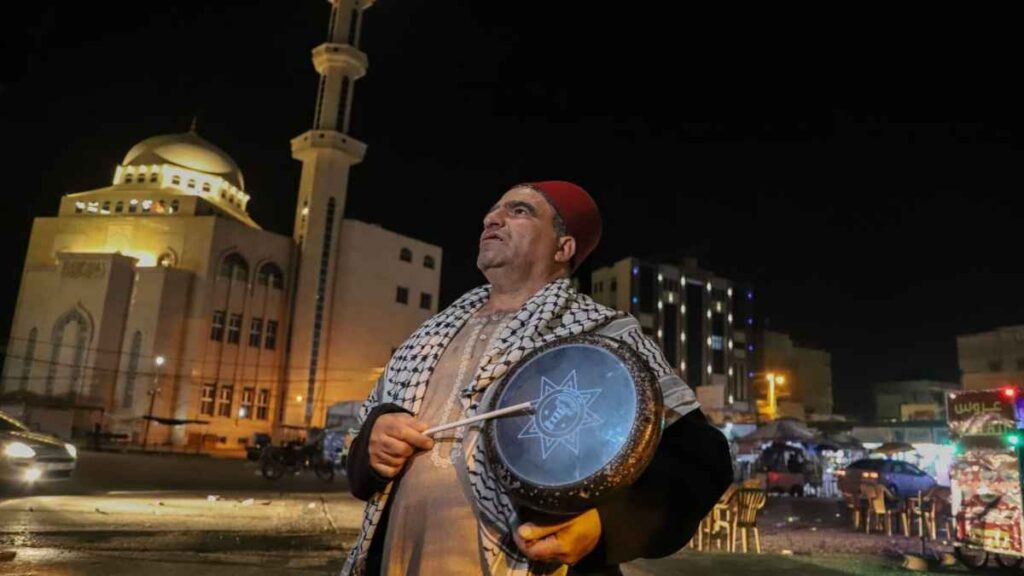
Local’s Pro-Tip: In 2026, you can still hear mesaharatis in Cairo’s older quarters between 2:00 AM and 3:30 AM during Ramadan. If you are staying in Zamalek, Maadi, or New Cairo, you will likely miss them. Book one night in a Downtown or Islamic Cairo guesthouse specifically for this. The sound of drumming and chanting echoing through stone alleys at 3:00 AM, while the rest of the city sleeps, is unlike anything else on Earth.
Streets of Light: How Egypt Invented Ramadan Decorations
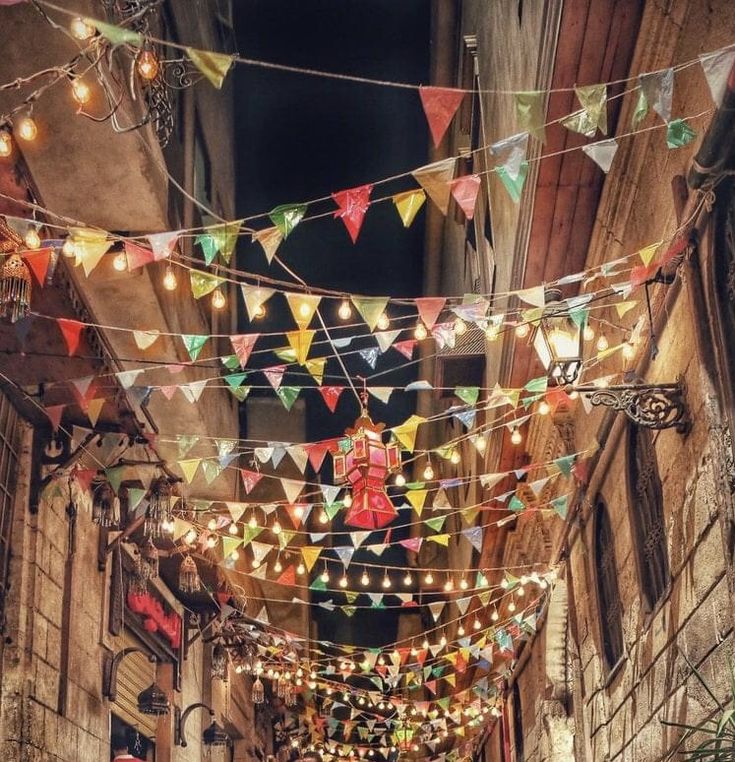
Before the lantern became a handheld symbol, it was part of something larger: Egypt’s tradition of transforming entire streets into corridors of light during Ramadan.
Al-Maqrizi records that the Fatimid caliphs ordered the illumination of Cairo’s mosques and public spaces throughout the nights of Ramadan. This was not subtle. Streets were lined with oil lamps. Mosque courtyards blazed. The effect, in a pre-electric age, was stunning: an entire medieval city glowing against the North African dark.
By the Mamluk era (1250 to 1517), the art of illumination had become deeply sophisticated. The historian Ibn Iyas, in his chronicle Bada’i al-Zuhur fi Waqa’i al-Duhur, describes ornate glass lamps etched with Quranic verses and geometric patterns that turned functional lighting into sacred art. Many of these Mamluk mosque lamps now sit behind glass in the Museum of Islamic Art in Cairo, the Victoria and Albert Museum in London, and the Metropolitan Museum of Art in New York.
The tradition filtered down from palaces and mosques to ordinary streets. By the 19th and 20th centuries, neighborhoods across Egypt began decorating their alleyways with handmade garlands, paper cutouts, and colored lights. Today, almost every street in Egypt is canopied in strings of lights, banners, and crescent-and-star motifs that transform working-class streets into something that resembles an open-air cathedral of color.
This is not just decoration for its own sake; families across Egypt still handcraft their Ramadan decorations from colored paper and recycled materials, turning the preparation itself into a communal ritual that begins days before the holy month. The act of decorating is, in many Egyptian households, the true beginning of Ramadan.
A Legacy of Generosity: Culinary Heritage
Maidat Al-Rahman (Tables of the Merciful)
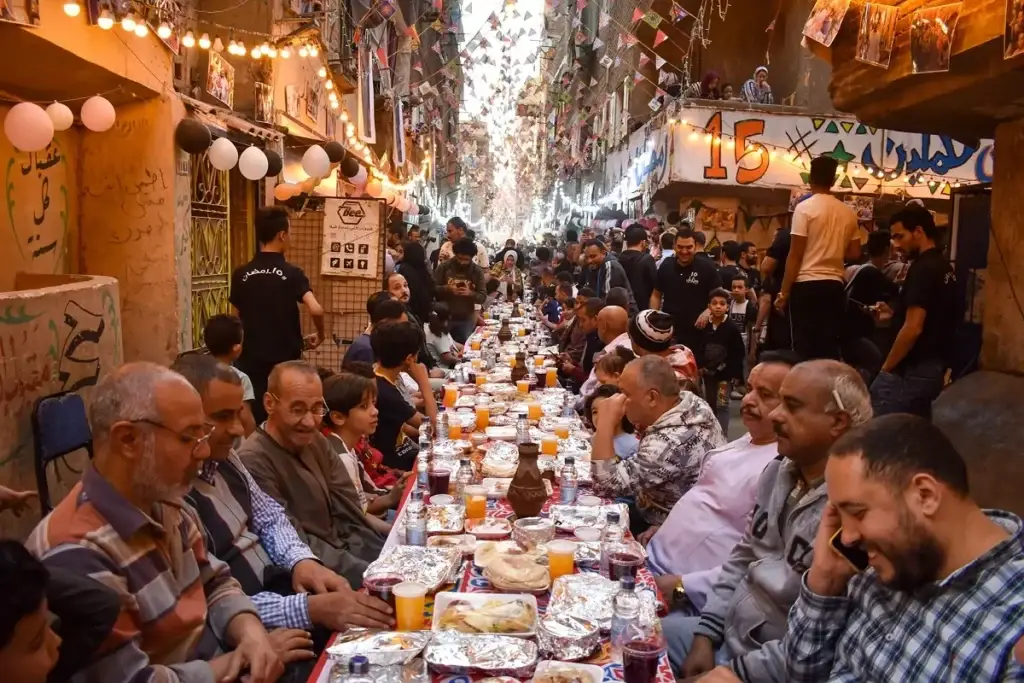
Walk through any neighborhood in Cairo just before the Maghrib call to prayer, and you will see miles of long tables set up in the streets, offering free, hot meals to absolutely anyone who sits down. While this beautiful display of communal charity is now a global Islamic practice, its institutional blueprint was drafted directly in 9th-century Egypt.
The tradition officially began with Ahmad ibn Tulun, the founder of the Tulunid dynasty, around the year 880 AD. Recognizing the economic disparity in his growing capital, Ibn Tulun gathered his military commanders and the wealthiest merchants on the first day of Ramadan. He hosted a massive banquet and issued a strict royal decree, commanding the Cairene elite to set up tables for the poor, the travelers, and the working class for the entire duration of the holy month.
The great Egyptian historian Al-Maqrizi (1364 to 1442) documented these staggering events in his encyclopedic masterpiece Al-Khitat. Al-Maqrizi detailed how the Fatimid rulers established the “Dar al-Fitra” (The State Kitchen), which operated around the clock to distribute mountains of sugar, flour, and meat. They set up banquets spanning hundreds of meters near the historic Amr ibn al-Aas Mosque and the newly built Al-Azhar.
What started as a royal decree to prevent starvation during the Middle Ages evolved into a grassroots, community-funded staple of the modern Cairene Ramadan. Today, local mechanics, shop owners, and corporate CEOs alike pool their money to host these tables, proving that the philanthropic machinery of medieval Cairo is still alive and well in our streets.
Local’s Pro-Tip: Expats and tourists are always welcome to sit and eat at a Maidat Al-Rahman, as it is considered an honor for the hosts to feed guests. However, a highly rewarding way to experience this history firsthand is by participating in the preparation. In 2026, trusted local organizations like the Egyptian Food Bank and Resala Charity welcome foreign volunteers to pack Iftar boxes at their New Cairo and Maadi centers.
The Sweet History of Egyptian Ramadan Desserts
The quintessential Middle Eastern dessert table was born in the royal kitchens of medieval Cairo. While other regions have their own variations, the institutionalized mass production of these sweets during Ramadan is a distinctly Egyptian invention, tracing back to the Fatimid and Mamluk eras when rulers used sugar and flour to display political dominance and wealth.
Basbousa: The Semolina Masterpiece
Derived from the Arabic word “bas”, which means to mix flour gently with ghee, Basbousa is an Egyptian original that perfected the art of the semolina cake. While the Ottoman Empire later spread other Egyptian variations like Revani across the Mediterranean, the Cairene method of soaking the cake in a light, rose-water-infused sugar syrup and topping it with fresh almonds or clotted cream (eshta) remains completely unique to the Nile Valley.
Konafa and Qatayef: Palace Innovations
While the Levant has historical ties to these sweets, it was Egypt that first made them and turned Konafa and Qatayef into the ultimate Ramadan staples. When Caliph Al-Muizz li-Din Allah entered Cairo during the holy month of Ramadan, the city’s bakers rushed to create a dish that was highly caloric to sustain him through the fast. The result was the stringy, syrup-soaked Konafa. Qatayef, the folded pancake stuffed with nuts or cream, was heavily documented by the medieval historian Al-Maqrizi. He noted that during the Fatimid era, these desserts transitioned from royal palace exclusives to mass-produced street food meant to feed the fasting public of Cairo.
Luqmat al-Qadi (Lukma): The Judge’s Bite
Walk down any busy street in historic Cairo after Iftar, and you will see vendors deep-frying small spheres of dough and tossing them into vats of cold syrup. These are Luqmat al-Qadi, which translates to “The Judge’s Bite.” Dating back to the 13th century, this dessert was historically served to Islamic judges who needed a quick, sugar-dense bite to maintain their energy during long court sessions. The streets of Alexandria and Cairo popularized the dish, turning it from a high-class energy booster into an affordable, universally loved Ramadan street food.
Kahk: The Ancient Egyptian Story of the Middle East’s Favorite Cookie
Long before the Arab world fell in love with date-stuffed Ma’moul, ancient Egyptian bakers were carving the blueprint for these festive treats into the walls of Pharaonic temples. The modern regional Ma’moul is directly related to Egyptian Kahk, a buttery, intricately stamped pastry originally baked as a sacred solar offering over 3,000 years ago. This ancient recipe was later institutionalized by the 10th-century Fatimid Caliphate, which established massive state-run bakeries to distribute thousands of date-filled cookies to the fasting public. Today, this unbroken, millennia-old tradition remains a mandatory, joyous centerpiece in every Egyptian home.
Om Ali: The Dessert Born of Mamluk Revenge
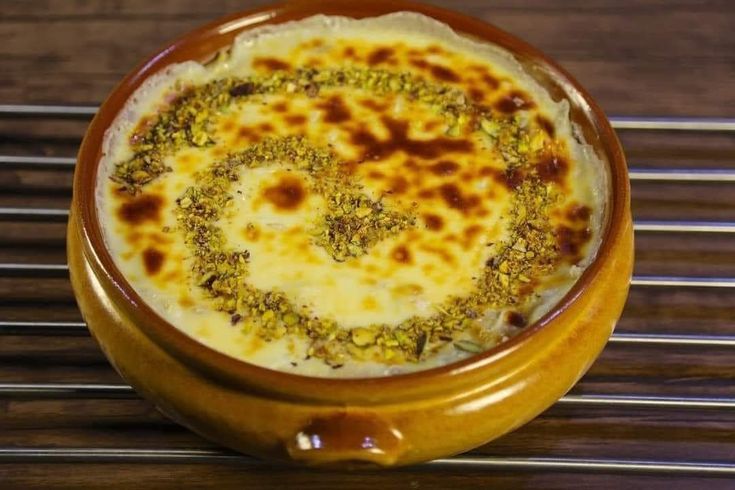
Om Ali is arguably the most famous Egyptian dessert, but its origin story is a brutal and fascinating piece of Cairene history. In the 13th century, the fierce Sultana Shajar al-Durr ruled Egypt. After a bitter power struggle, she was assassinated by the rival wife of her husband. That rival was known as Om Ali (Mother of Ali). To celebrate the death of the Sultana, who was famously beaten with wooden clogs, Om Ali ordered her cooks to create a brand new dessert. They mixed pastry dough, rich milk, sugar, raisins, and nuts, baking it in a massive clay pot. She then distributed this sweet concoction throughout the streets of Cairo in celebration, cementing its name and legacy in Egyptian culinary history.
The Royal Goblets: Historic Ramadan Drinks
Egyptian Ramadan drinks were historically engineered with a very specific purpose. They needed to combat severe dehydration in the North African heat while providing an immediate spike of natural sugars after a 14-hour fast. These beverages were perfected in ancient and medieval Egypt before spreading across the Arab world.
Enaab (Iced Karkade)
Long before the Islamic conquests, Ancient Egyptians were brewing the crimson petals of the hibiscus flower to cool down in the desert heat. During Ramadan, this Pharaonic tradition transforms into Enaab. Unlike standard hot Karkade, Enaab is steeped for hours, heavily sweetened, and served ice-cold. It is an Egyptian original that acts as a natural diuretic and blood pressure regulator, making it the medically perfect beverage to break a long, hot summer fast.
Sobia: The Mamluk Energy Drink
Sobia is a milky, sweet, and slightly spiced drink that dominates Egyptian Iftar tables. Its origins trace back to the Mamluk era in Egypt. Originally, it was a fermented drink made from leftover bread, rice, and spices, created to ensure no food went to waste in poorer neighborhoods. Over the centuries, Cairenes refined the recipe into the luxurious, non-alcoholic version we drink today, using coconut powder, milk, vanilla, and sugar. It is a brilliant example of how Egyptian street culture elevated a survival mechanism into a beloved holiday tradition.
From the Spice Trade to the Iftar Table: The Story of Iced Tamarind
Although Tamarind literally translates to “Indian Date” and originated in tropical regions, the icy, sweetened beverage poured at Iftar is a distinctly Egyptian invention. During the Fatimid caliphs’ rule, Egyptians capitalized on Cairo’s booming spice trade to import the tart pods, transforming them into a chilled, sugar-rich drink designed to instantly rehydrate fasting citizens in the North African heat. This brilliant Cairene refreshment quickly became a symbol of Ramadan hospitality, flowing outward from the royal palaces and bustling markets of historic Cairo to become a beloved staple across the entire Arab world.

The Ramadan Cannon: A Mistake That Echoed Across the Islamic World
Every Ramadan evening, at the exact moment of sunset, a cannon fires from the Saladin Citadel in Cairo. The boom rolls across the rooftops, bounces off the Mokattam Hills, and reaches the minarets of Islamic Cairo. Within seconds, spoons hit bowls. The fast is broken.
The tradition is called Midfa al-Iftar (the Iftar Cannon), and it was born entirely by accident.
During the Mamluk era, around 1465 CE (859 AH), Sultan Khosh Qadam (also transliterated as Khashqadam) received a new cannon as a gift. When soldiers were testing the new cannon at sunset on the first day of Ramadan. The people of Cairo heard the boom, assumed it was a brilliant new state-sponsored way to signal Iftar, and crowded the streets to thank the Sultan. The Sultan’s wife, Haja Fatima, urged him to make it a daily tradition, and the rest is history.
Why This Matters
Understanding the origins of Egyptian Ramadan Traditions transforms a simple vacation into a profound historical journey. At ilovecairo.com, we believe that traveling is about context. When you buy a Fanous, you are participating in a 1,000-year-old royal welcoming ceremony. When you hear the Mesaharaty, you are listening to an echo from 853 AD. Knowing this connects you directly to the heartbeat of the real Cairo.
FAQ
1. How did Egyptian Ramadan traditions spread to the rest of the Middle East? Before the internet and satellite TV, Cairo was the undisputed media capital of the Arab world. Throughout the mid-20th century, Egyptian radio and television broadcasted the sunset cannon, the rhythmic Mesaharaty calls, and the famous Fawazeer (Ramadan riddles) across the region. Neighboring countries loved the festive Cairene vibe so much that they adopted these practices as their own regional standards.
2. Is the Mamluk Ramadan Cannon at the Citadel still the original one? The exact cannon from Sultan Khosh Qadam’s 1465 test firing is long gone, but the tradition remains heavily guarded. The Egyptian military uses a ceremonial cannon today at the Saladin Citadel. The massive boom you hear echoing across Cairo at sunset is still broadcast live on national TV and radio, uniting the country exactly as it did centuries ago.
3. Will the Mesaharaty wake me up at my hotel in Zamalek or Maadi? Probably not if you are staying in a major hotel or a high-rise in a modern suburb like New Cairo. The Mesaharaty tradition thrives in historic, densely packed residential neighborhoods where buildings are closer together. If you want to hear the authentic drumbeat, book a boutique stay in Islamic Cairo or sit at a street cafe in Khan el-Khalili around 2:00 AM.
4. Can I pack a traditional metal Fanous in my checked luggage? Yes, and you absolutely should. When buying a handmade copper and glass Fanous from Shari3 Al-Khayamiya (Street of the Tentmakers), ask the vendor to wrap it heavily in newspaper and cardboard. They are surprisingly sturdy, but the glass panels need protection. A medium-sized lantern fits easily into a standard checked bag.
5. Why is “Om Ali” so popular if its history is so dark? Cairene humor and pragmatism are legendary. When the 13th-century figure Om Ali ordered the dessert to celebrate the brutal death of her royal rival, the public simply focused on how delicious the massive clay pots of creamy, nutty pastry were. Today, it is a symbol of Egyptian hospitality and celebration, completely divorced from its ruthless Mamluk origins.
Want to experience Cairo like a true local? Grab our curated 25 Best Things to Do in Cairo 2026 (Self-Guide) for the ultimate itinerary. Planning your trip for March 2026? You are in for a treat. Check out our comprehensive Ramadan in Cairo 2026 Guide to make sure you capture the magic of the holy month exactly the way we do.